Posts

Showing posts with the label Network Models

Peer-to-peer Model

Image
  Peer-to-peer Model Ø   The peer to peer systems contains nodes that are equal participants in data sharing . Ø     All the tasks are equally divided between all the nodes . Ø   The nodes interact with each other as required as share resources . This is done with the help of a network. Ø   Since nodes in peer to peer networks act as both clients and servers , it is difficult to provide adequate security for the nodes. This can lead to denial of service attacks. Ø   Most modern operating systems such as Windows and Mac OS contain software to implement peer to peer networks. Ø   Advantages of Peer to Peer Computing ·          Each computer in the peer to peer network manages itself . So, the network is quite easy to set up and maintain. ·          In the client server network, the server han...

Client/Server Model

Image
  Client/Server Model Ø   In client server systems, the client requests a resource and the server provides that resource. Ø   A server may serve multiple clients at the same time while a client is in contact with only one server. Both the client and server usually communicate via a computer network and so they are a part of distributed systems. Ø   The client server computing works with a system of request and response. The client sends a request to the server and the server responds with the desired information. Ø   The client and server should follow a common communication protocol so they can easily interact with each other. All the communication protocols are available at the application layer. Ø   A server can only accommodate a limited number of client requests at a time . So it uses a system based to priority to respond to the requests. Ø   An example of a client server com...

Distributed Systems

Image
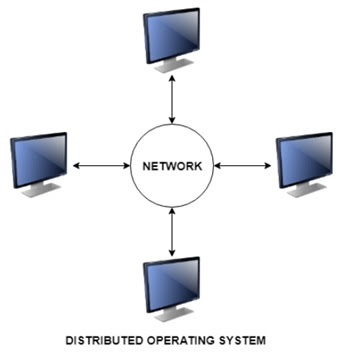
  Distributed Systems Ø   In this type of processing different CPU are connected to the network and are controlled by single CPU. Ø   For example, in air reservation system there exists different terminals and processing is done from many locations and all the computers are controlled by the single main processor. Ø   This type of network is called  distributed network . Ø   A distributed system contains multiple nodes that are physically separate but linked together using the network . All the nodes in this system communicate with each other. Ø     Each of these nodes contains a small part of the distributed operating system software. Ø   A diagram to better explain the distributed system is: Ø   Types of Distributed Systems 1)      Client/Server System 2)      Peer-to-Peer System Ø   Advantages of Distrib...

Centralized Systems

   Centralized Systems Ø   In centralized system, one or more terminals are connected to a single processor . Note that terminal is the combination of mouse, keyboard, and screen. Ø   In-library there is one processor attached to different terminals and library users can search any book from the terminal (mouse, keyboard, and screen). Ø   In centralized system all the terminals are controlled by a single processor (CPU) and any command can be fulfilled by a single processor and this type of network is called  centralized network . Ø   Thus, a simple computer houses all the data (Centralized database) of an organization and user have access to these data via terminal. Ø   Advantages: 1)      All operations and management of system are now under auspices ( it is done with their support and approval.) and control of single department. 2)      Cost less to purchase and maintain a large centrali...

Computer Communication and Networking Models

Computer Communication and Networking Models: 1)      Decentralized Systems 2)      Centralized Systems 3)      Distributed Systems 4)      Client/Server Model 5)      Peer-to-peer Model A)    Decentralized Systems: Ø   In decentralized environment, user maintain their own systems . Ø    There is no electronic exchange of resources or information among these separate systems. Ø   It provides user or departments with computing independence i.e. it moves control of system closer to end user. Ø   Thus departments do not have to conform to mandates of central group and can allocate resources and set priorities in a manner compatible with departmental needs. Ø   It results in data redundancy/duplication, inconsistency and can be expensive to implement in terms of increased costs of hardware, maintenance, support and operatio...

Search related post on google